A number of recent announcements point to a clear direction of travel for UK life sciences: deeper integration with the US market, stronger public and semi-public backing for innovation, and London further reinforcing its role as Europe’s life sciences capital. This round-up brings together the main developments and what they mean for companies considering market entry, expansion or export between the UK and US.
At a glance
- A major new cornerstone commitment from the British Business Bank to a specialist biotech fund, taking its life sciences fund commitments above £560m and leveraging over £3bn in private capital.
- Zero tariffs on UK pharmaceutical and medical technology exports into the US for an initial three-year period, under the new UK–US Economic Prosperity Deal.
- London attracting multi-billion-dollar levels of venture capital so far this year, more than several other European capitals combined, and strengthening its position as Europe’s life sciences capital.
- More than £74m in new backing for UK life sciences and deep-tech projects, spanning AI-enabled manufacturing, novel radiotherapies and antimicrobial resistance
British Business Bank backing for a new biotech fund
The British Business Bank has confirmed plans for a large cornerstone commitment to a new biotech fund managed by a specialist life sciences investor. It is the largest single fund commitment in the Bank’s history.

Key points include:
For companies, it matters because cornerstone commitments of this size:
- The new commitment lifts the Bank’s total fund commitments to life sciences to around £560m, across a portfolio of specialist funds.
- Those commitments have helped to leverage over £3bn of private‑sector capital into UK life sciences, meaning each pound of public money draws in several pounds from private investors.
- The new fund focuses on multi‑stage therapeutics and places particular emphasis on precision medicine and AI‑driven drug development.
For policy‑makers, this move is presented as part of the Life Sciences Investment Programme and the broader Life Sciences Sector Plan. It is intended to address the growth‑stage funding gap that has historically pushed some promising UK biotechs to list or relocate overseas.
- Help funds reach first close more quickly, bringing growth capital to market sooner.
- Support a more predictable pipeline of follow‑on finance for firms progressing from seed and Series A into later stages.
- Indicate a clear policy preference for areas such as therapeutics, AI in drug discovery and precision medicine.
A UK–US pharmaceuticals deal – and what zero tariffs mean

The UK government has announced a pharmaceuticals agreement with the United States, as part of the wider UK–US Economic Prosperity Deal.
The deal has three main pillars:
- Zero tariffs into the US: The UK becomes the only country to secure a 0% tariff rate on a defined basket of pharmaceutical exports to the US, covering finished medicines, active ingredients and certain medical technologies.
- Preferential treatment for med‑tech: The agreement commits the US side to maintain favourable terms for UK medical technology exports, including a moratorium on introducing new tariffs over the life of the deal.
- UK commitments on innovative medicines: In return, the UK has agreed to increase spending on innovative medicines, including adjustments to the way cost‑effectiveness is assessed, which should allow more high‑value therapies (for example in oncology and rare diseases) to be approved for NHS use.
The announcement is linked to the UK’s wider Life Sciences Sector Plan and its 2030 ambition to be Europe’s leading life sciences economy, building on recent investment pledges from major pharmaceutical companies.
Quotation – UK Government (Liz Kendall, Science and Technology Secretary)
“This vital deal will ensure UK patients get the cutting-edge medicines they need sooner … and keep developing the treatments that can change lives.”
Zero tariffs are not automatic
The customs and compliance detail is important.
Under the zero‑tariff arrangements:
- Duty‑free access applies only to goods that meet UK origin criteria under the rules set out in the agreement.
- Exporters must be able to evidence origin, classify products correctly under the US tariff schedule, and ensure that UK export declarations mirror the data used by the US importer.
- Weak origin documentation, mismatched tariff codes or vague product descriptions can result in loss of preferential treatment, delays or penalties.
For UK companies, the opportunity is significant – especially for high‑value, repeat shipments of finished medicines and devices – but so is the need to ensure origin, classification and documentation processes are robust from the outset.
New government backing for cutting‑edge UK projects
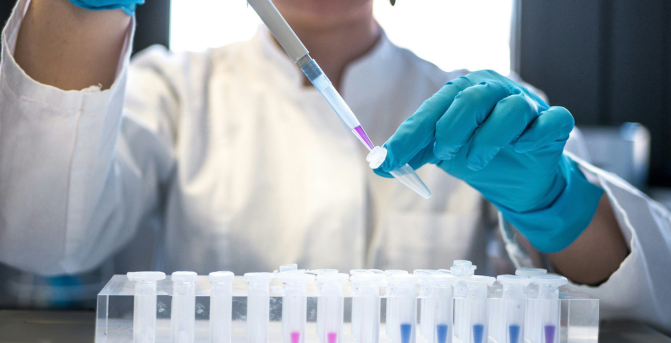
Alongside fund‑level commitments, the government has announced multi‑million‑pound backing for a portfolio of high‑profile life sciences and deep‑tech projects, with more than £74m in combined public and industry funding.
Headline themes include:
- AI and robotics in medicines manufacturing – exploring how automation and data can improve the efficiency, resilience and flexibility of medicines production.
- Nuclear‑derived radiotherapies – using material from nuclear power generation as a feedstock for next‑generation cancer treatments.
- Projects tackling antimicrobial resistance, advanced diagnostics and environmental impacts such as recycling anaesthetic gases used in hospitals.
The announcement sits within a wider narrative:
- UK life sciences generate roughly £150bn in annual turnover and support over 300,000 jobs.
- The sector is described as one of the priority sectors for the UK economy, alongside areas such as advanced manufacturing and clean energy.
Quotation – UK Government (Liz Kendall, Science and Technology Secretary)
“The life sciences sector is a core part of our Industrial Strategy … it turns over £150 billion a year and supports hundreds of thousands.”
Taken together with the new biotech fund, this indicates that state‑backed capital and innovation funding are being aligned more deliberately around a set of long‑term platforms: AI, engineering biology, advanced manufacturing and health data.
London as Europe’s life sciences capital

Recent analysis from London & Partners, timed around London Life Sciences Week, presents London as Europe’s leading life sciences city.
The headline numbers are as follows:
- London‑based life sciences firms have attracted multi‑billion‑dollar levels of venture capital so far this year.
Quotation – London & Partners
“London has cemented its position as Europe’s powerhouse for life sciences, attracting $2.1 billion in venture capital investment so far in 2025.”
- London has raised more VC than several other major European capitals combined and currently ranks as one of the top non‑US cities globally for life sciences investment.
The underlying ecosystem is a key part of this picture:
- There are more than 2,700 life sciences companies in the capital.
- 19 of the world’s top 20 pharmaceutical companies have a presence in London.
- The city hosts a growing network of life sciences districts, including the “Knowledge Quarter” around King’s Cross, clusters in and around major teaching hospitals, and new campuses in outer boroughs.
AI as a driver of the funding trend
A key theme in the analysis is the role of AI:
- Companies using AI in life sciences have attracted a substantial proportion of London’s life sciences investment.
- There is a clear link between AI‑enabled drug discovery, precision medicine and diagnostics on the one hand, and larger investment rounds on the other.
For international companies, this positions London as a practical base where biopharma, med‑tech, AI and capital markets are close together geographically – a factor that becomes relevant when planning research collaborations, joint ventures or European headquarters.
What this means for life sciences exporters and investors
Bringing these developments together, three practical implications stand out for life sciences businesses looking at UK–US and intra‑European strategies.
UK–US corridor: tariffs down, compliance demands up
The zero‑tariff deal reduces a visible cost line, particularly for high‑value or bulk products, but it also increases the requirements around compliance:
- Origin rules, product classification and aligned UK–US declarations will be scrutinised more closely.
- Firms that treat the deal as a simple tariff reduction risk losing preferential treatment if they cannot substantiate origin or classification choices.
Quotation – Customs Declarations UK
“Zero-tariff treatment is not automatic – it requires compliant export declarations, credible origin documentation and accurate commodity classification.”
For exporters, this is an opportunity to embed trade‑compliance capability into market‑entry planning, rather than bolt it on after first shipments.
Growth‑stage capital is deepening – but selective
Between the British Business Bank’s fund commitment, the broader Life Sciences Investment Programme and the new innovation funding, there is clearly more public‑anchored capital in the system.
However:
- Capital is concentrated in specific themes (therapeutics, AI, advanced manufacturing, radiotherapies and complex manufacturing).
- Cornerstone commitments are designed to crowd in institutional and pension‑fund capital, not replace private investment.
For companies, this means:
- Aligning propositions clearly with these thematic priorities.
- Being ready to meet the due‑diligence standards that come with public‑backed money and specialist funds.
London as a launch platform – not just a funding hub
The London & Partners data reinforces London’s status as a practical base for European and global expansion: dense clusters, access to specialist talent, major pharma anchors and an investor base already familiar with life sciences risk.
For market‑entry strategies, that translates into:
- Treating London as a platform for R&D, clinical partnerships and data‑driven innovation, not just as a place to raise capital.
- Building AI capability into life sciences propositions from the outset, given how central it now is to both investment flows and policy narratives.
Sources
UK Government – Landmark UK-US pharmaceuticals deal to safeguard medicines access and drive vital investment for UK patients and businesses: https://www.gov.uk/government/news/landmark-uk-us-pharmaceuticals-deal-to-safeguard-medicines-access-and-drive-vital-investmentfor-uk-patients-and-businesses
The Times – British Business Bank to back new life sciences fund: https://www.thetimes.com/business/companies-markets/article/british-business-bank-100m-kate-bingham-kp0vv2lgw
UK Government – Multi-million pound backing for cutting-edge projects by UK scientists and innovators: https://www.gov.uk/government/news/multi-million-pound-backing-for-cutting-edge-projects-by-uk-scientists-and-innovators
London & Partners – London surges ahead as Europe’s life sciences capital: https://www.londonandpartners.com/newsroom/news-and-communications/london-surges-ahead-as-europes-life-sciences-capital
Customs Declarations – UK-US Economic Prosperity Deal: zero-tariff pharmaceuticals overview: https://www.customs-declarations.uk/uk-us-economic-prosperity-deal-zero-tariff-pharmaceuticals/